



The One Concept Method is a brand design approach where a designer develops and presents one complete, strategically informed brand identity instead of several competing concepts.
The idea is that your designer uses their expertise, along with the research and strategy completed at the beginning of the project, to determine the strongest creative direction for your business. Rather than presenting three different logos and asking you to choose your favorite, they present one cohesive identity with a clear rationale behind the design decisions.
It’s an approach I’ve used in my own brand design process for years, although I do things a little differently than many designers who practice the One Concept Method.
Presenting one concept doesn’t mean my clients only get one choice throughout the design process.
In fact, my clients have quite a bit of influence over the direction of their brands. We explore multiple visual possibilities, experiment with typography and color palettes, and make some pretty significant creative decisions together before I begin actually designing their custom identity.
The difference is when we make those decisions.
I’ve been designing brands for more than a decade, and I’ve found that the strongest results come from establishing a thoughtful creative direction first, rather than developing several finished identities and asking the client to pick their favorite.
So let’s talk about how the One Concept Method works, why I use it, and what you can expect when we partner together.
Why I Use the One Concept Method for Brand Design
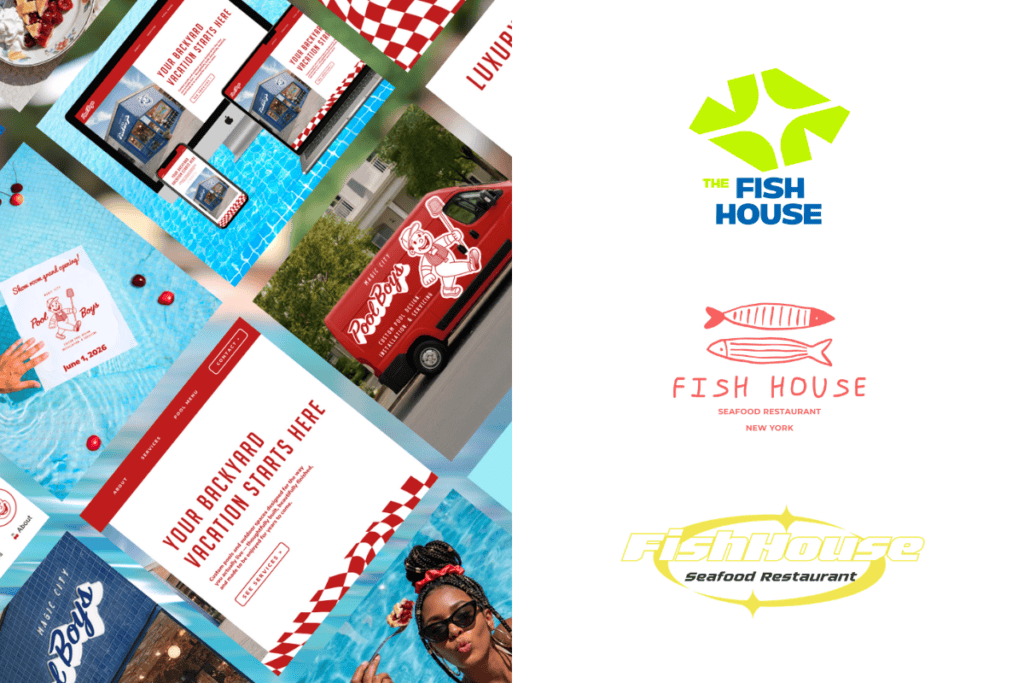
I don’t believe the best way to serve a client is to present several unrelated designs and ask them to decide which one is best for their business.
That’s part of what they’re hiring me to help them determine.
Now, don’t misunderstand me. Your opinion absolutely matters! It’s your business, your reputation, and ultimately your brand that we’re developing.
Buuut there’s a difference between knowing your business and knowing how to translate that business into a strategic, USABLE visual identity.
You’re the expert on your business. I’m the expert on branding and design.
You understand your customers, your industry, the experiences you’ve had, and what makes your business different. You know what you’ve built and what you’re working toward.
My role is to take that knowledge, look at the bigger picture, and develop a brand that communicates those things effectively.
And here’s something worth understanding about design: there’s rarely one correct creative direction. Give 50 experienced designers the exact same creative brief, and you’ll likely get 50 completely different brand identities. Some might be stronger than others, but several could be equally effective at accomplishing the same strategic goals.
That’s because design is creative problem-solving, and there’s more than one way to solve a problem. The One Concept Method doesn’t mean I believe there’s only one possible solution for your business. It means I’m taking responsibility for exploring the possibilities, evaluating them against our strategy, and recommending the direction I believe is strongest.
I’m thinking about how your business is positioned, what your audience needs to understand, how your competitors present themselves, and how the identity will function across the different places people encounter your business.
I’m also thinking about the future. Your brand might need to work on just a website and LinkedIn today, but what happens when you introduce a new service, develop educational resources, open another location, or expand your marketing?
Those decisions influence the design from the very beginning.
And when I present your finished identity, I want to be able to explain exactly why I’ve recommended that direction.
I want to show you how the work we’ve done together has informed the creative decisions and WHY I believe the resulting identity is right for your business.
That’s the kind of responsibility I believe a professional brand designer should be willing to take.
Your Role in the Process (and Mine)
Collaboration is essential to my process, but we have different responsibilities.
Your job is to share your knowledge of your business, participate in the strategy process, provide thoughtful feedback during creative direction, and communicate when something doesn’t feel aligned with what we’ve established.
My job is to ask the right questions, identify the connections that matter, develop and recommend the creative direction, make informed design decisions, and explain how those decisions support your business.
We’ll make important decisions together, particularly during the research and creative direction stages. Once we’ve agreed on a direction, I’m responsible for translating it into a complete brand identity.
That’s how I approach collaboration: we each bring our expertise to the project, and we use it where it matters most.
How My One Concept Brand Design Process Works
My process has four main phases: research, design, refinement, and delivery. Within the design phase, we establish the creative direction together before I begin developing your custom identity.
Each phase builds on the decisions made during the previous one, so by the time we reach your brand presentation, the direction shouldn’t feel like a surprise.
1. Research: Understanding Your Business
Every project begins with understanding the business we’re designing for.

Before we start talking about fonts, colors, or logos, I want to know what exactly you do, why you do it, who you’re trying to reach, and what you want your business to become.
You’ll complete a brand workbook and create a Pinterest inspiration board, and then we’ll meet for a brand strategy session.
During that conversation, we explore your mission, values, audience, positioning, goals, and the experiences you want people to associate with your business.
I’m looking for the things that make your business distinctive, including details you may not immediately recognize as relevant to your branding.
Maybe there’s something about the way you serve clients that sets you apart from competitors, or you’ve developed a particular philosophy through years of experience. Your reputation may be built around qualities that aren’t being communicated through your current marketing.
Those things help shape your brand!
The goal is to establish a strategic direction we can return to when making creative decisions.
While I absolutely want you to love your brand, it also needs to actually work for your business.
If we haven’t established what we’re trying to communicate, design decisions can quickly become a conversation about favorite colors and personal taste.
And personal taste alone isn’t a strong enough foundation for a business identity (even if it’s a personal brand).
2. Design: Creative Direction Comes First
This is where my approach to the One Concept Method might surprise you.
I actually present multiple creative directions before I begin designing your brand identity.
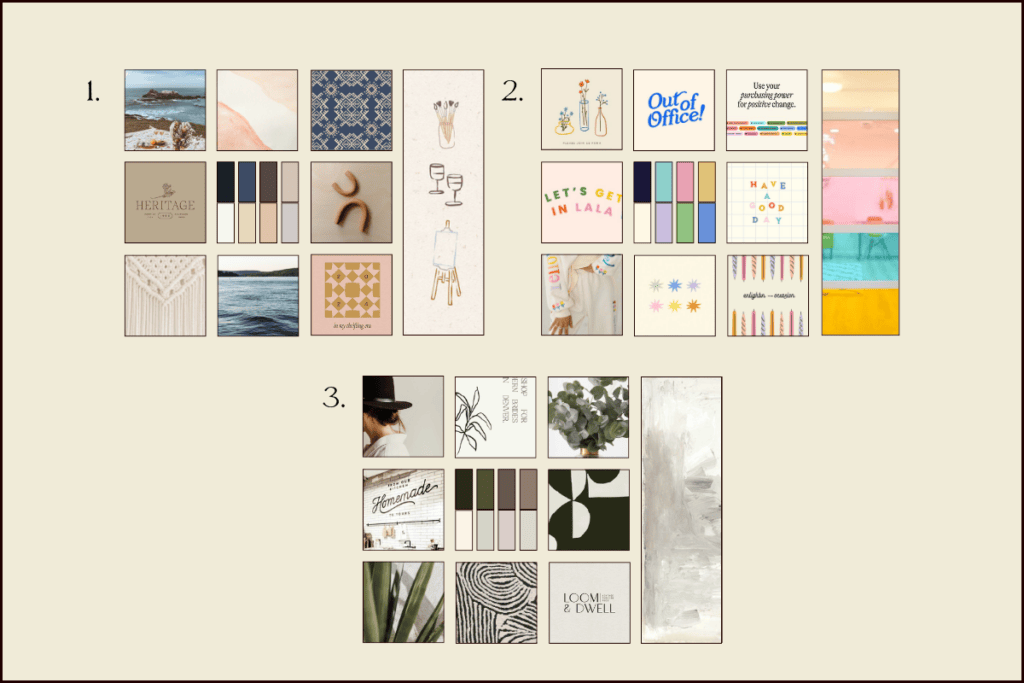
Using what we’ve established during the research phase, I develop moodboards that explore different visual interpretations of the strategy.
These aren’t random collections of pretty pictures I found on Pinterest. I’m considering how the typography, colors, photography, illustrations, textures, and other elements work together to create a specific impression.
And those details really do matter! Research conducted by Monotype and Neurons found that typography can increase positive emotional responses by up to 13%. Even the fonts we choose can influence how people feel about a business, which is exactly why I approach these decisions strategically.
Each moodboard explores its own combination of fonts, color palettes, imagery, and visual references for elements we might eventually develop, such as logos, illustrations, patterns, icons, packaging, or environmental design.
For example, imagine we’re developing a brand for a law firm.
One direction might explore a more traditional, heritage-inspired identity with strong serif typography and rich colors. Another might take a contemporary editorial approach, using modern type, expressive imagery, and a more unexpected palette.
Both could potentially communicate expertise and professionalism, but they would create very different experiences.
Our job is to determine which direction best represents the particular attorney, the way they practice law, and the clients they want to reach.
I’ll often edit inspiration imagery to reflect the proposed typography and color palettes so you can get a better sense of how the elements might work together.
This is also the stage where you’re most actively involved in the visual decision-making.
We’ll discuss what resonates with you, what feels off, and whether the direction supports what we established during the strategy phase.
You might prefer the typography from one direction and the photography style from another. That’s totally fine! We can explore those combinations and make adjustments while we’re still developing the creative direction.
I actually encourage that kind of feedback at this stage.
It’s much easier to explore a different color palette or typography direction while we’re working with inspiration and references than after I’ve spent hours developing a custom logo, illustration library, and complete visual identity around those decisions.
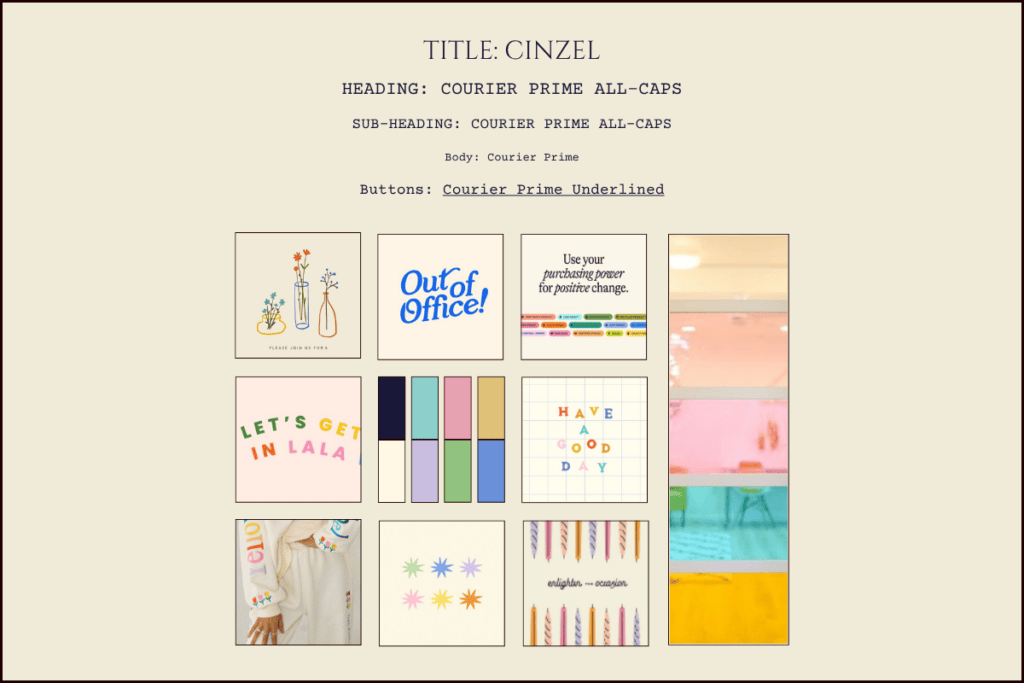
Once we’ve established a cohesive direction and you’re confident in it, I move into custom design.
Developing Your Brand Identity
Now comes one of my favorite parts of the entire process.
With the strategy and creative direction established, I begin developing the actual brand identity.
Depending on the project, I might start by sketching logo ideas with pencil and paper, exploring logo typography in Illustrator, or experimenting with different compositions and letterforms.
Some projects call for custom illustrations, hand-drawn elements, painted textures, or other artwork. I might work in Procreate, Photoshop, Illustrator, or with physical materials that I later bring into the final digital design.
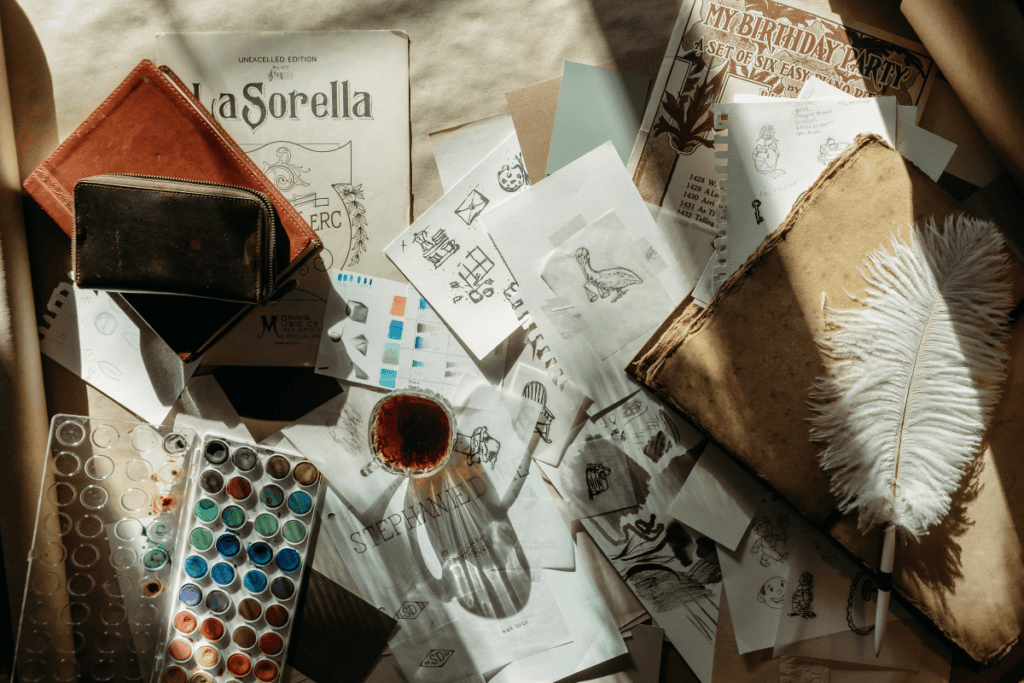
The techniques vary because the creative direction varies.
I don’t want every client walking away with a slightly different version of the same brand simply because I have a favorite design style or a particular way I prefer to work.
As the identity develops, I build the primary logo, secondary logo variations, submarks, and any additional brand marks or supporting elements included in the project.
These pieces need to work together as a complete visual system.
Your logo might appear on a storefront sign, but it may not be appropriate for a tiny social media profile image. A detailed illustration could be beautiful on a brochure but completely impractical for an embroidered uniform.
That’s why I’m thinking beyond the primary logo from the beginning.
Once the identity is developed, I create a comprehensive brand presentation that shows how the elements work individually and together.
And this is where the process becomes particularly exciting for clients.
Seeing Your Brand in the Real World
I don’t believe a client should have to imagine how their brand might look outside of a design presentation. I want to show them!
So I create mockups that demonstrate how the identity could function across the materials and experiences relevant to their business.
For a restaurant, that might include menus, packaging, signage, uniforms, a food truck, website graphics, or even elements of the physical space.
For a dental practice, we might explore signage, scrubs, patient materials, office interiors, branded supplies, and the website.
A professional service business might need presentations, stationery, educational resources, social graphics, or client documents.

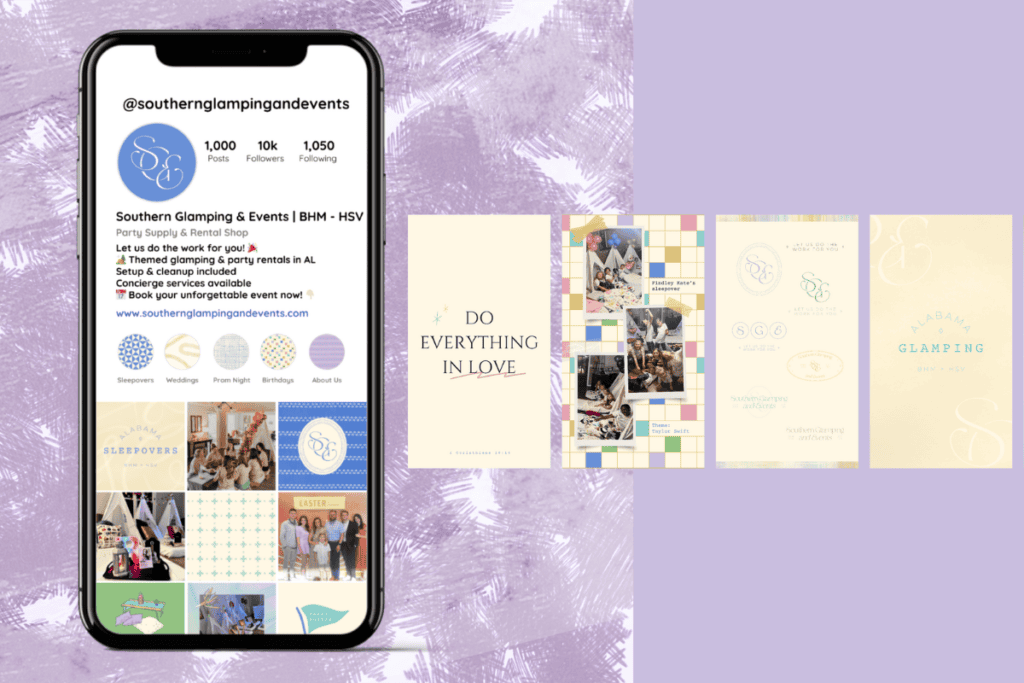
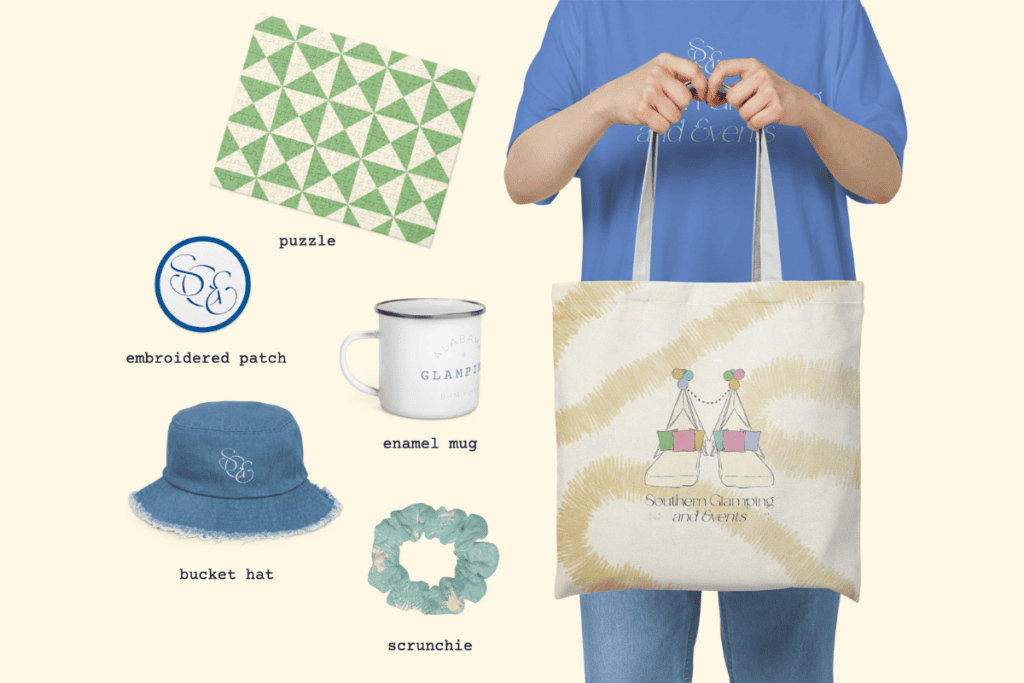

The applications change depending on the business because the goal isn’t simply to make the brand look impressive in a portfolio. It’s to help you understand how the identity can function in the places your customers will actually encounter it.
My brand presentations bring everything together, including the original mission and creative direction, color palette, typography system, logo variations, supporting elements, and real-world mockups.
I also explain the reasoning behind the major design decisions so you can see how the finished work connects to the strategy we established together.
You’re seeing one complete brand identity built around decisions we’ve already made.
3. Refine: Reviewing and Approving Your Brand
After presenting the brand identity, I send an approval form so you can review each element and provide your feedback.
Sometimes seeing everything together reveals something you’d like to adjust. A particular color may need a little more attention once you’ve seen it applied across several materials. Your tagline might’ve changed. Those are the kinds of refinements we can work through together.
My brand identity projects include two rounds of revisions. I ask clients to consolidate their feedback into a single submission for each round rather than sending a series of separate requests.
This gives you an opportunity to thoughtfully review the work as a whole and helps us make changes in a focused, organized way. Additional revision rounds are billed separately.
What’s interesting to me after all this time is how rarely substantial changes are needed at this stage.
In my experience, approximately nine out of ten clients need little or no significant revision after the initial presentation.
I don’t think that’s because I have some magical ability to read people’s minds (although some say I can do that, haha).
It’s because we’ve already spent time working through the strategy and creative direction together. You’ve had multiple opportunities to influence the direction, ask questions, and help shape the decisions that led to the finished identity.
What If I Don’t Love the Concept?
This is probably the most understandable concern someone has when they first hear about the One Concept Method.
You’re making a significant investment in your business. What happens if I present your brand identity and you don’t love it?
Here’s something that might surprise you: In more than a decade of designing brands, I’ve never had a client completely reject the concept I’ve presented.
That doesn’t mean every detail is automatically perfect. Sometimes a color needs adjusting, a tagline changes, or an element needs a little more attention once you see it applied across the full identity. That’s exactly what our revision rounds are for.
But there’s a considerable difference between refining a brand we’ve thoughtfully developed together and starting over because we never agreed on what we were creating in the first place.
If something genuinely isn’t working, I want to understand why. Is there a particular design decision that doesn’t communicate what we intended? Is there a disconnect between the approved creative direction and the finished identity? Or has the business’s desired direction changed since we established the strategy?
Those are different situations, and the appropriate next steps would depend on what needs to change.
A complete change in creative direction after approval would be a much larger undertaking than refining an existing concept, and could require a separate scope of work.
I put so much emphasis on the research and creative direction stages precisely because I don’t want either of us reaching the end of the project and discovering we’re on completely different pages.
4. Deliver: Preparing Your Brand for the Real World
Once the identity is approved, I prepare the final files and brand documentation.
You’ll receive your brand assets organized in the appropriate formats and color variations, along with a comprehensive Brand Style Guide and a one-page Brand Style Sheet for quick reference.
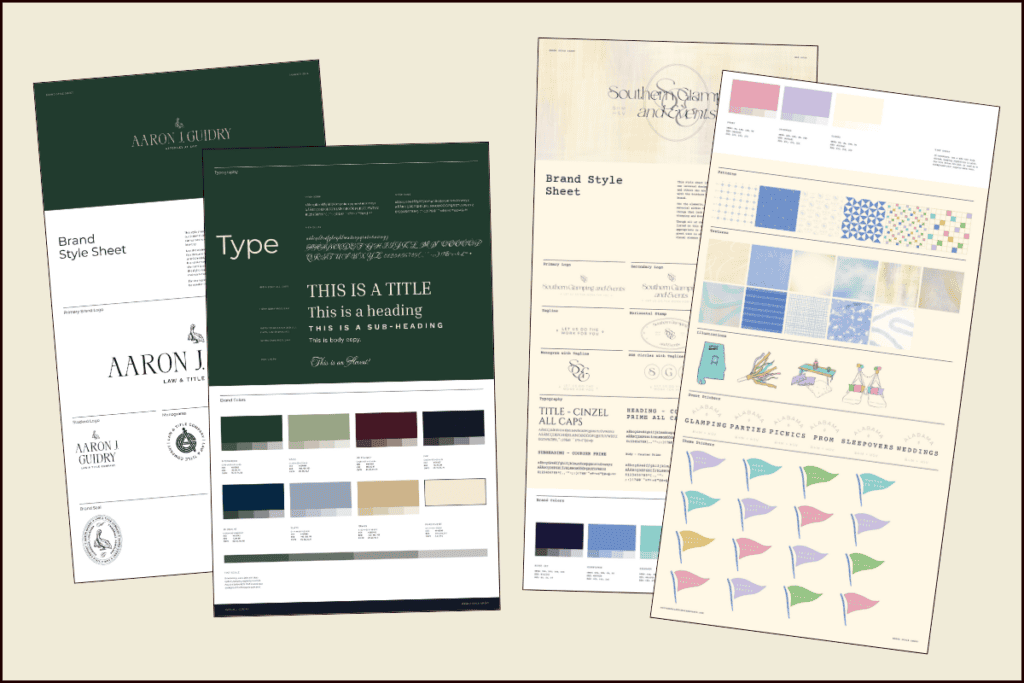
The style guide documents the visual system we’ve developed, while the style sheet makes it easy to find essential information like font names and color codes when you’re working on everyday business materials.
We also have a brand implementation meeting, which I love!
During that meeting, I walk you through your files, explain which formats to use in different situations, and help you understand how to apply your identity consistently.
We’ll set up your Canva Brand Kit and organize your assets in our shared Google Drive so you have a practical system for using everything we’ve created.
I don’t want you finishing a brand project with a folder full of files and absolutely no idea what to do with them.
And sometimes, this is the point when clients realize how many things their new brand will eventually touch. Hint, it can be A LOT!
Email signatures, website pages, social media graphics, client documents, email templates, signage, merchandise, printed materials, packaging…
The list can get pretty long, especially for an established business.
That’s why I also offer ongoing creative direction and design support for clients who want help implementing their new identity across the rest of their business.
Is the One Concept Method Right for You?
The One Concept Method works well for business owners who value collaboration and want a designer to take responsibility for the creative decisions.
You’ll be actively involved in helping me understand your business and establishing the creative direction. I’ll be responsible for translating that direction into a complete visual identity.
That division of responsibilities is intentional.
I expect my clients to participate, communicate openly, and provide thoughtful feedback. In return, they can expect me to bring my professional judgment, explain my recommendations, and develop work that’s grounded in the strategy we’ve established.
I also work through a structured process. We make decisions at the appropriate stages, approve the creative direction before custom design begins, and use the refinement phase to strengthen the identity we’ve developed.
If you prefer to compare several completed logo concepts before making a decision, my process probably isn’t the right fit for you.
I don’t change my approach from project to project, and I think it’s important for prospective clients to understand that before we begin working together.
There are plenty of talented designers who work differently. What matters is finding someone whose expertise, process, and approach align with what you’re looking for.
For the clients I partner with, the One Concept Method gives us a way to combine their knowledge of their business with my expertise in brand strategy and design, without confusing who is responsible for what.
A Brand Built to Support Your Business
The value of this process extends beyond the initial brand presentation.
We’re developing a visual identity that needs to function across your business, whether someone encounters you through a referral, visits your website, receives a proposal, or sees your marketing online or in person.
Those experiences should all feel connected.
Your brand isn’t another piece of your business. It is THE foundation connecting the pieces.
When we’ve thoughtfully established that foundation, you have a consistent visual system to use as your business develops. New materials, services, and marketing initiatives can build on the identity rather than requiring an entirely new creative approach.
That’s what I’m working toward when I develop a brand, and it’s why I’m so intentional about the decisions we make throughout the process.
Ready to Partner on Your Brand?
If you’ve spent years building a business you’re proud of but your current branding doesn’t adequately represent the reputation, experience, or vision behind it, I’d love to hear about it!

My process combines brand strategy, collaborative creative direction, and custom identity design to create a cohesive visual foundation that reflects your business and supports where you’re headed next.
And now that you understand how I work, we can spend our first conversation discussing your business, your goals, and whether we’re the right fit to partner together.
Some links on this page may be affiliate links. I only recommend tools I personally use and trust.

Website Planning 101

These resources are pulled directly from the same materials and frameworks I use with my clients — designed to help you think through your brand and website with more clarity and intention. Consider this a behind-the-scenes look at how I approach the work.
A peek inside my process
From the Studio Library

I create thoughtful brand identities and custom Showit
websites designed to bring clarity, cohesion, and direction to your business — so everything finally feels like it fits.
I’ve worked with businesses across a wide range of
industries, but the goal is always the same: build something intentional, aligned, and bookable.
And yes… it gets to look really good too.
